1.1 Isolating the levels of abstraction
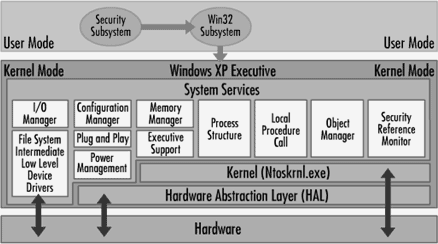
Several physical components can be abstracted by a single virtual component. Conversely, from a logic point of view, the physical components are not linked to each other and can be analyzed independently of each other. A bottom up approach, from the physical components to the logic components, allows us to further abstract the hardware by establishing the level of interaction offered by different layers separating the hardware of these logic components. Without knowing which route to take to achieve a physical component, or which component it is, the logic components of the solution are able to communicate with the physical components using an interface exposed by a software layer that underlies the logic component. These layers are more and more abstract than the lower layers, and use the functionality from these layers to expose the functionality to higher layers, by way of a generic interface.
Contents · 4/26
- Design for High Availability
- Introduction
- 1 Hardware Abstraction
- 1.1 Isolating the levels of abstraction
- 1.2 Physical components category
- 1.3 Virtual Layer
- 1.4 Abstraction of virtual components
- 1.5 Characteristics of virtual components
- 2 High Availability Mecanisms
- 2.1 Framework for analysis of the mechanisms and assumptions
- 2.2 Public interface of a solution
- 2.3 Risk Control
- 2.4 One approach: duplication
- 2.5 Limits of replication of immutable virtual components
- 3 Evaluation of downtime risks
- 3.1 Dependency hierarchy
- 3.2 Bottlenecks
- 3.3 Method for calculating availability
- 3.4 Methodology of analysis
- 4 Evaluation in real cases
- 4.1 Basic software solution
- 4.2 Analysis without assumptions
- 4.3 Evaluation with addition of availability assumptions
- 4.4 Assumption in a cloud scenario
- Conclusion
- References